Resistance wire, impulse sealing bands, heating wire and special profiles
Resistance materials for packaging machines, film sealing, cutting and industrial heating. Round wires, flat bands, cutting profiles and custom cross-sections in standard or PTFE-coated versions.
Resistance materials, heating and cutting elements
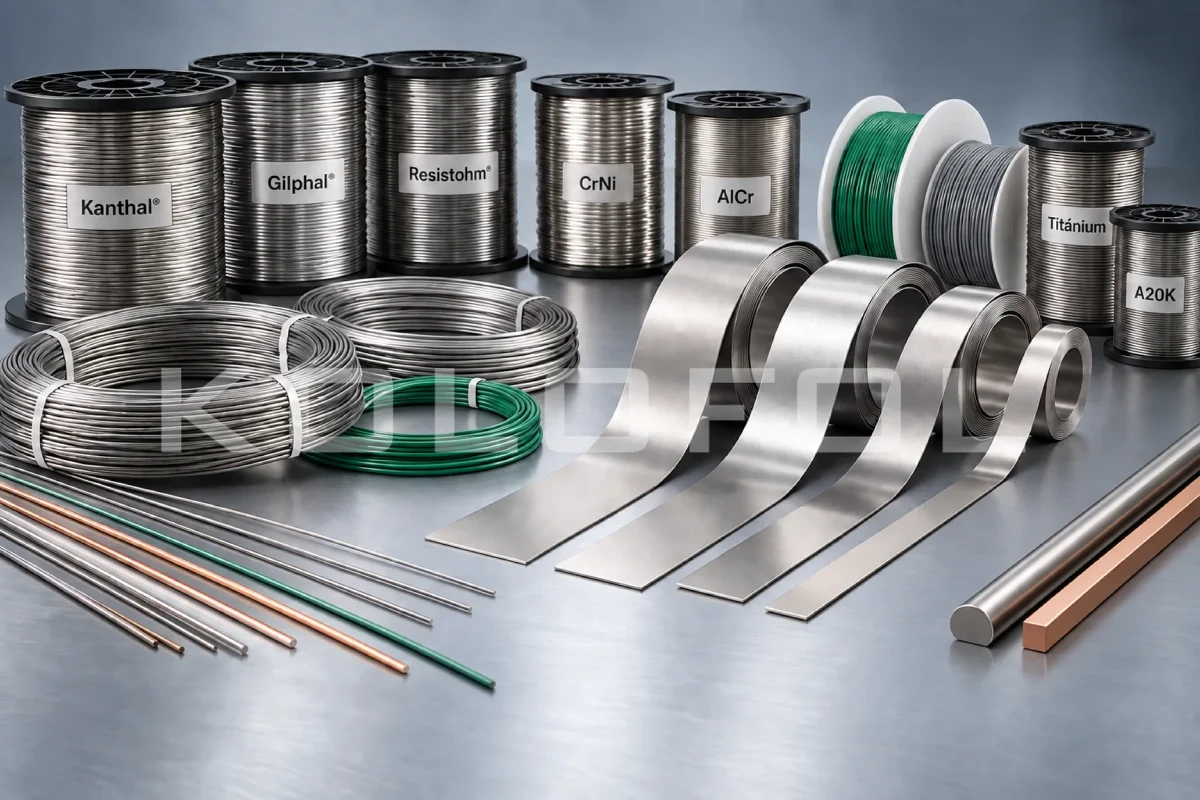
The KOLOFOL range includes Kanthal®, Gilphal®, Resistohm®, CrNi and AlCr, Titanium resistance materials as well as A20K special hard steel alloy. These materials can be used as heating, baking, cutting and sealing elements in applications including packaging machines, XPS foam cutting, furnace heating and series resistors.
The correct material is determined by electrical resistance, cross-section, operating temperature, mechanical load, mounting method and the required sealing or cutting geometry.
- Round wire – For heating and cutting wires and small-cross-section resistance elements.
- Flat sealing band – For impulse sealing machines; width and thickness determine the electrical and thermal behaviour.
- Special profile – Triangular, semicircular, T-profile, raised, cutting or custom profiles for special seals.
- PTFE-coated version – Selected wires, bands and profiles can also be supplied with a non-stick PTFE coating.
Geometry matched to the sealing application
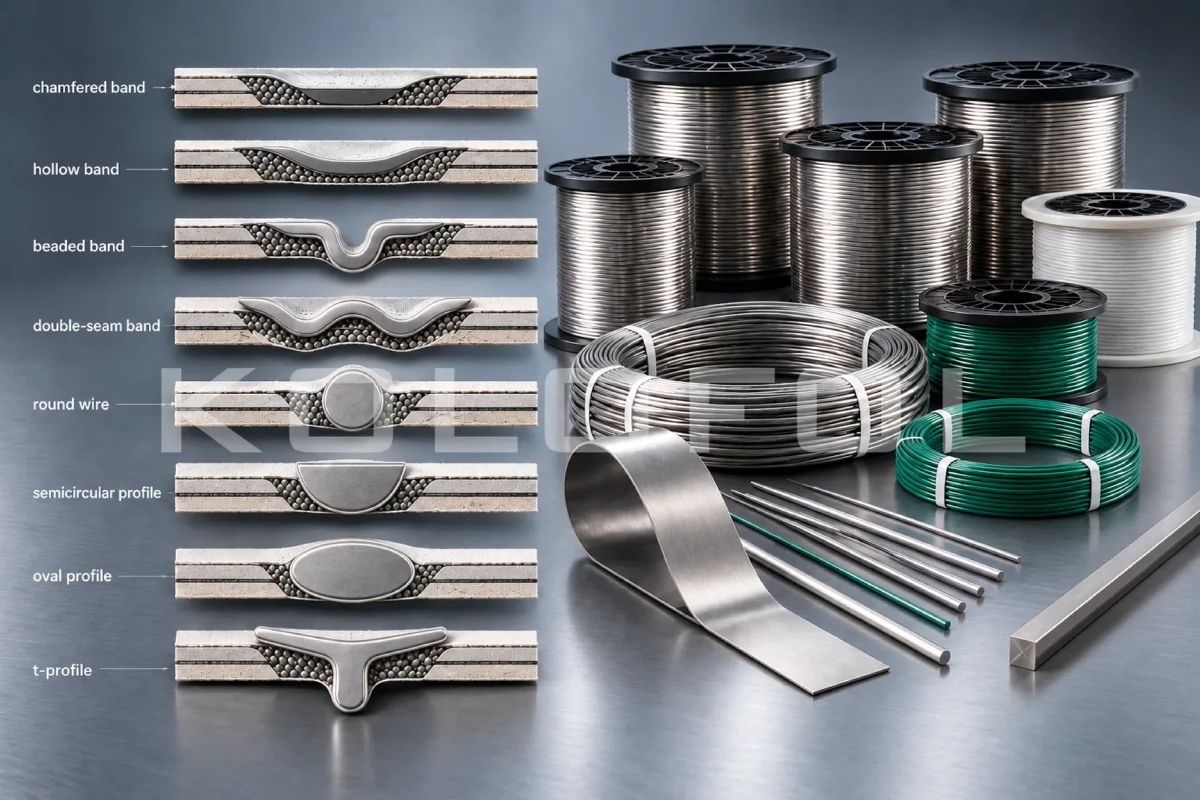
An impulse sealing element does not have to be a simple round wire or flat band. Its cross-section is critical to the seal path, heat distribution, cutting effect and current requirement.
Industrial options include standard band cross-sections, formed sealing elements, special-alloy bands, Duo-therm solutions and hollow wires. Hollow wire can provide a smaller effective cross-section and lower current demand, while also allowing internal compressed-air cooling.
- flat impulse sealing band
- round cutting and heating wire
- triangular and semicircular profiles
- T-profiles and other special profiles
- contoured sealing element
- Duo-therm with different cross-sections for multilayer films
- hollow wire for flat sealing or seal-and-cut applications
Impulse sealing bands for film sealers and packaging machines
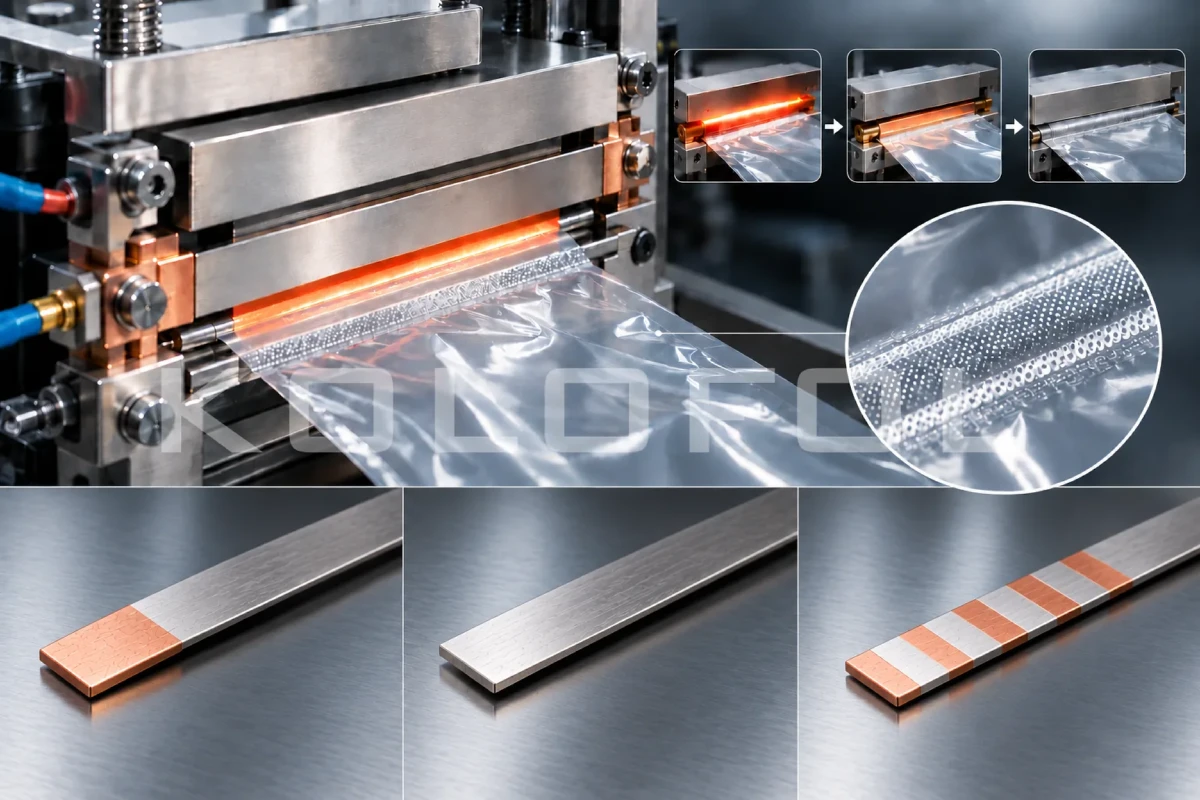
In impulse sealing, current is applied to the resistance element for a short time to heat the film, after which the seal cools under pressure. Uniform heat transfer and correctly designed connection points are important for a stable process.
Local overheating can occur near the connections at the ends of a sealing band. Surface treatment of the band ends can reduce this effect. Industrial options include silver plating, copper coating, copper + nickel and, for special applications, copper + gold.
- Copper coating – A widely applicable solution; partial, so-called zebra copper coating can also be produced.
- Copper + nickel – Useful where corrosion resistance or longer storage is important; also suitable for contoured bands.
- Special alloy – A sealing element with lower thermal expansion can simplify the tensioning mechanism in certain applications.
- High-strength seals – Special impulse elements for vacuum, liquid and more difficult-to-seal packaging.
Titanium hot-cutting wires for precision foam cutting
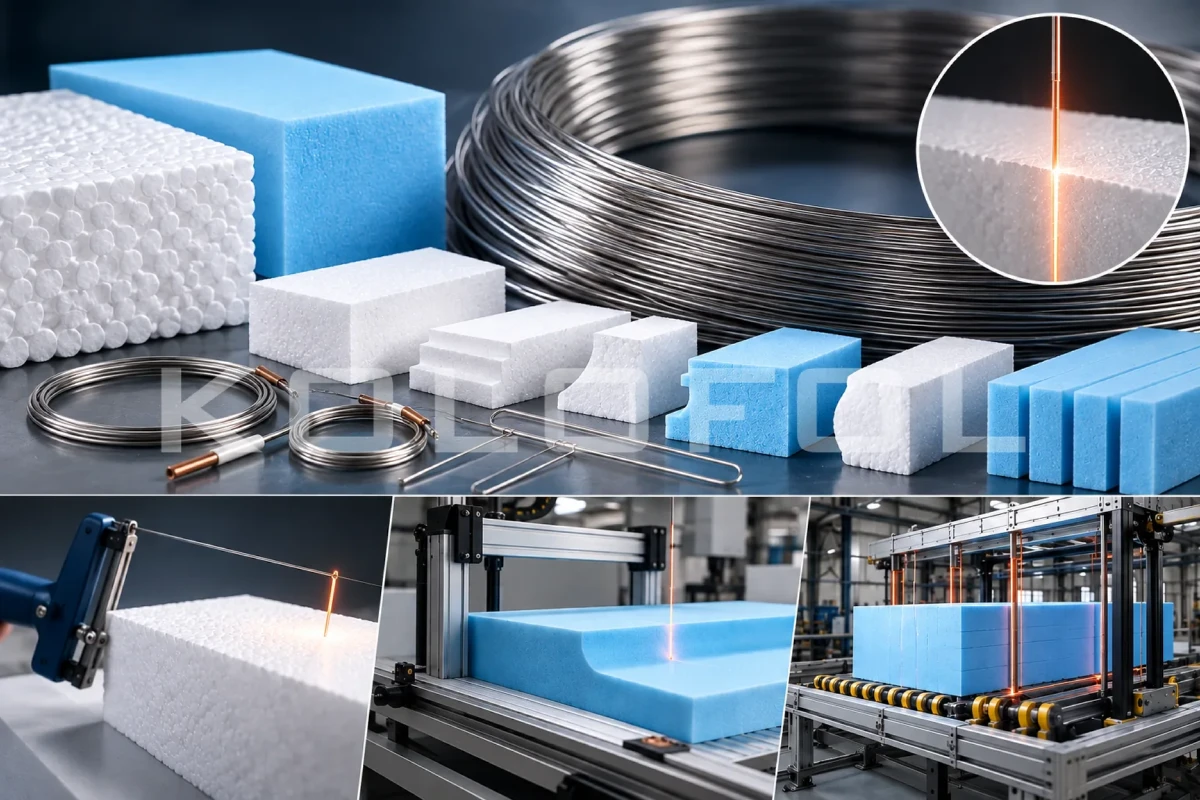
Titanium hot-cutting wires can be used for cutting EPS (expanded polystyrene) and XPS (extruded polystyrene) foam in manual cutters, CNC cutting machines and block-cutting lines. A small wire diameter can reduce kerf width and help produce a clean, even cut surface.
The correct wire diameter depends on foam type and density, machine electrical parameters, cutting speed, cutting length and required surface quality. A thicker wire may be preferable for wet, high-density, carbon-reinforced or recycled-content foams.
- Ø0,20–0,25 mm – For fine, precise cuts, especially in XPS.
- Ø0,30–0,35 mm – For CNC cutting of EPS and XPS, including profiles and decorative elements.
- Ø0,40 mm – For CNC cutting lines and block cutting, with greater mechanical durability.
- Ø0,47–0,50 mm – For slicing and trimming EPS blocks and higher-load applications.
Typical technical data
| Wire diameter | Resistance | Metres/kg | Tensile strength |
|---|---|---|---|
| Ø0,20 mm | 13,5 Ω/m | 3980 | 1500–2000 N/mm² |
| Ø0,25 mm | 12,5 Ω/m | 2450 | 1500–2000 N/mm² |
| Ø0,28 mm | 11 Ω/m | 2000 | 1500–2000 N/mm² |
| Ø0,30 mm | 10,5 Ω/m | 1700 | 1500–2000 N/mm² |
| Ø0,35 mm | 9 Ω/m | 1250 | 1500–2000 N/mm² |
| Ø0,40 mm | 8 Ω/m | 960 | 1500–2000 N/mm² |
| Ø0,47 mm | 6,2 Ω/m | 700 | 1500–2000 N/mm² |
| Ø0,50 mm | 5,9 Ω/m | 620 | 1500–2000 N/mm² |
| Ø1,00 mm | 3 Ω/m | – | 1500–2000 N/mm² |
The table shows typical product data. Technical values for the specific delivery batch and version must be confirmed at quotation stage.
- Coil supply – The required length can be cut during use.
- Cut-to-length wire – Pre-cut lengths can be supplied ready for use on request.
- Manual cutting machine – For prototypes, small production runs and on-site processing.
- CNC and block cutting – Contour cutting, slicing, trimming and higher-volume EPS/XPS processing.
PTFE glass fabric and PTFE coating around the sealing element
PTFE coated glass fabric can be used as a non-stick, heat-resistant release layer between the sealing element and film, and as support on the sealing bar. It can be supplied in rolls, cut to size, as die-cut parts or as cover strips for sealing bars.
With zone tapes featuring an adhesive-free centre, there is no adhesive directly above the heating element. On high-speed machines, tubular sleeves made from PTFE glass fabric can also be used.
Certain sealing wires and bands can be supplied with a direct PTFE coating. This can allow shorter heat-up and cool-down times, simpler maintenance and faster band replacement; precise temperature control is required because of the coating's thermal limits.
- PTFE glass fabric – Non-stick cover, backing and sealing-bar protection.
- Zone tape – Adhesive-free centre zone directly above the heating element.
- PTFE-coated element – Direct non-stick coating on wire, band or special profile.
- PTFE sleeve – Special solution around the sealing element for effective cooling and quick replacement.
Silicone rubber in the sealing bar
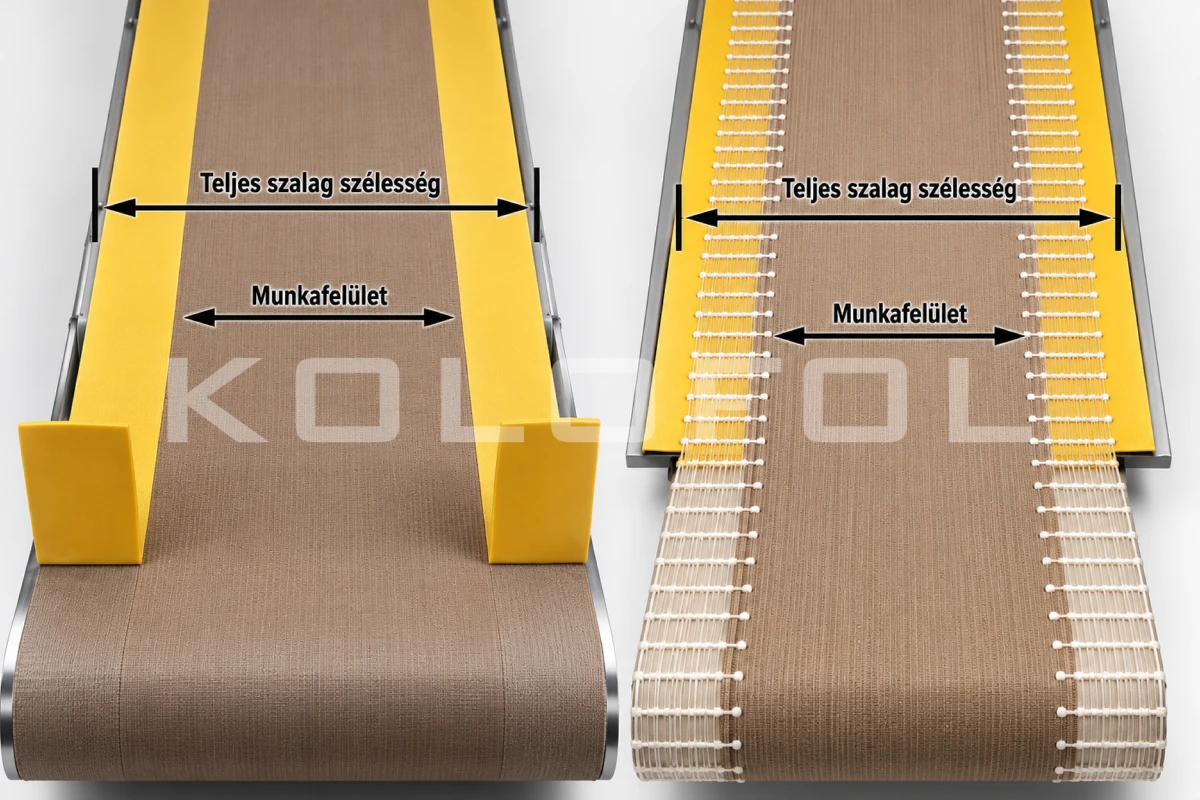
Silicone rubber strips, cords and profiles can be used as resilient counter-pressure, support and insulation elements in film-sealing equipment. The correct hardness and geometry help distribute pressure evenly along the seal.
Industrial solutions include silicone strips, tubing, cords, special profiles, sheets and cellular silicone products for these machine environments. Custom moulded or fabricated parts can also be produced from drawings.
- silicone strip for sealing-bar support
- solid or cellular silicone profile
- silicone cord and custom profile
- heat-resistant self-adhesive version for selected applications
- silicone-coated glass fabric and other insulation materials
Pull belts for vertical packaging machines
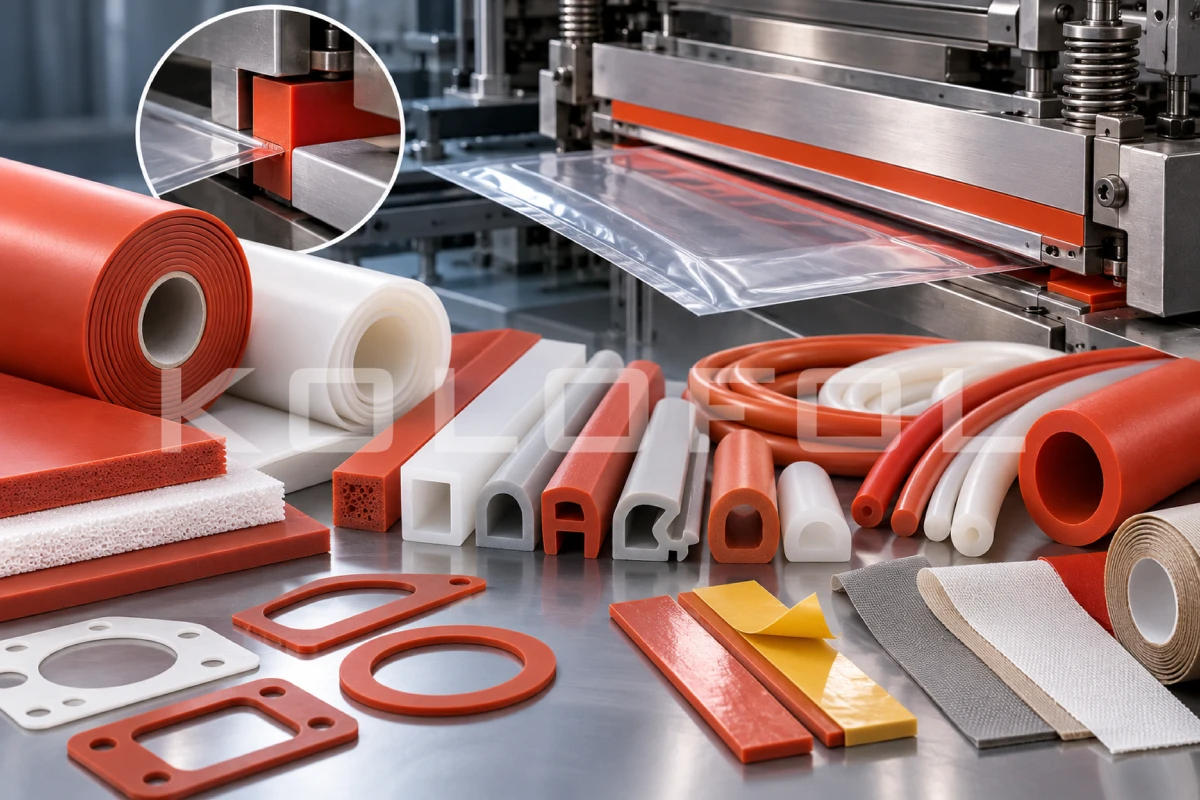
The pull belt that advances the film beside the forming tube requires high grip and wear resistance. Standard versions can use a high-friction rubber coating, while more demanding applications can use enhanced wear-resistant materials.
Belts can be produced with holes, cut-outs, vacuum openings or internal machining matched to the filling-tube profile. With vacuum belts, negative pressure holds the film against the belt. Production from drawings or samples is also possible.
- high-friction rubber coating
- high-performance wear-resistant version
- vacuum holes and custom cut-outs
- internal profile machining for the filling tube
- production from drawing or sample
Impulse element + PTFE + silicone + machine component
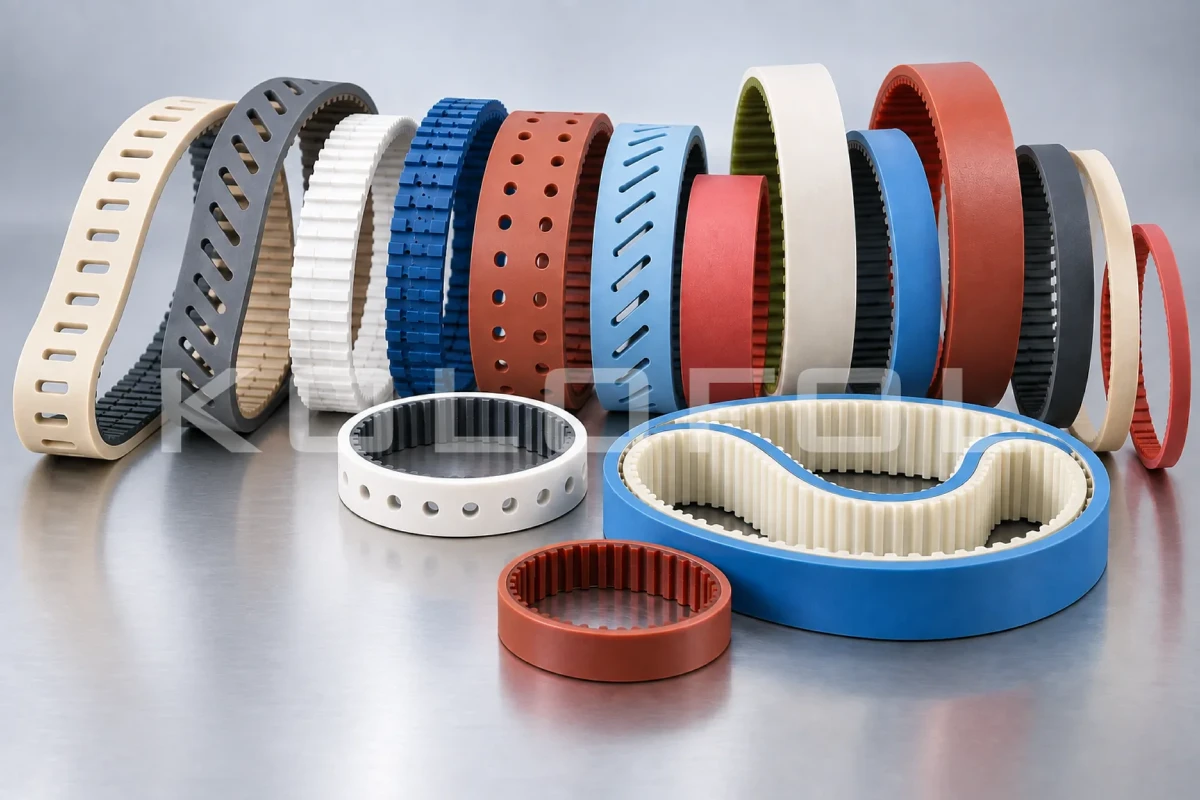
Reliable film sealing depends on the complete system rather than a single component. The resistance sealing element, PTFE non-stick layer, silicone counter-pressure or insulation element and the machine's mechanical settings all work together.
- 1. Sealing element – Wire, band or special profile with the required resistance and geometry.
- 2. PTFE layer – PTFE glass fabric, zone tape or direct PTFE coating.
- 3. Counter-pressure – Silicone rubber or another heat-resistant support material.
- 4. Film transport – Pull belt and related wear parts for stable machine operation.
What information should you provide?
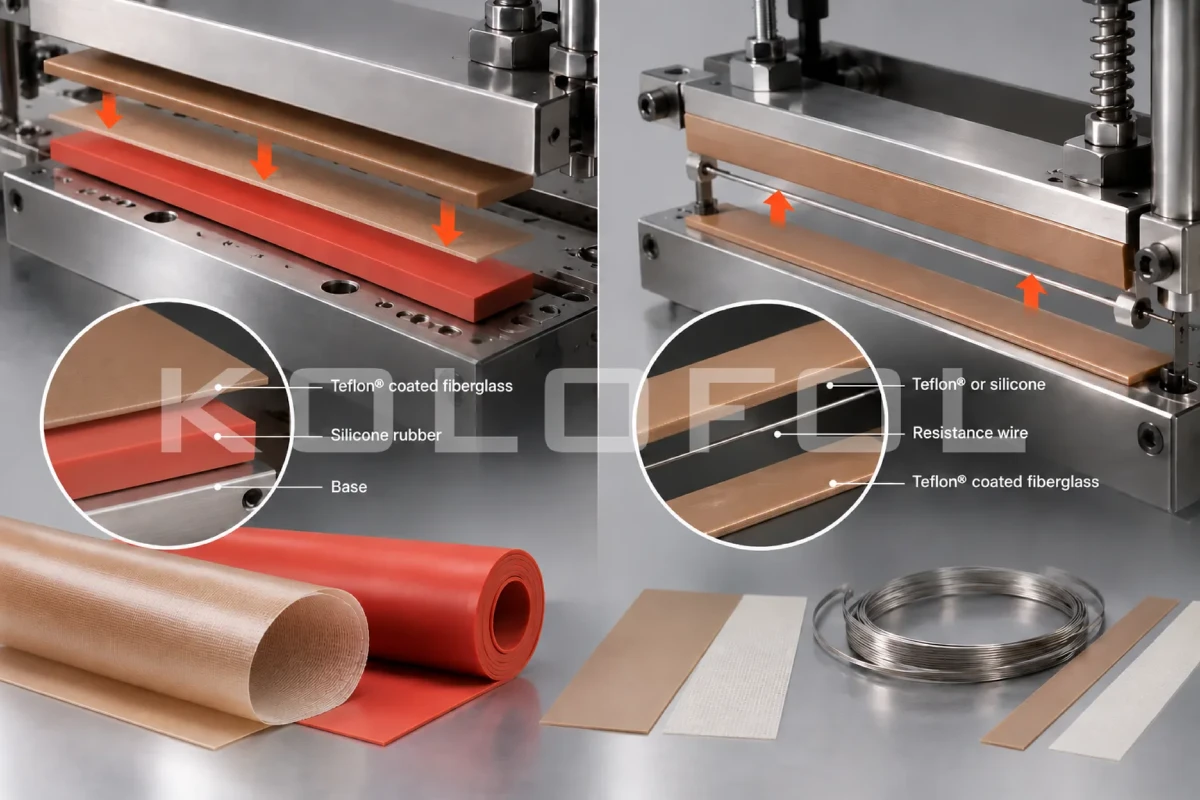
To identify the correct resistance wire or sealing band, exact dimensions and material grade are the most important details. If the existing material is unknown, machine data and a sample can also be used as a starting point.
- diameter or width × thickness
- overall length and active heated length
- material grade, if known
- cold resistance or resistivity, if known
- operating voltage / current / power, if known
- sealing, cutting or heating application
- connection-end design and coating
- requirement for PTFE coating or separate PTFE cover tape
- drawing, photo or original sample
- required quantity
Frequently asked questions
What is the difference between round wire and a flat sealing band?
The geometry produces different heat distribution and current density. Flat bands are often used for wider seals, while round or profiled wires are used for cutting, seal-and-cut or special seal geometries.
Can custom profiles be produced?
Yes. Special cross-sections and formed sealing elements can be produced from drawings, samples or technical requirements.
Why are the ends of sealing bands surface-treated?
To reduce local overheating near the electrical connections. Appropriate surface treatment can lower connection resistance and may increase service life.
What is PTFE glass fabric used for?
It provides a non-stick, heat-resistant release layer between the sealing element, film and sealing bar. Adhesive-backed, non-adhesive and zone-tape versions can be used.
Can a sealing band be directly PTFE coated?
Yes. Certain wires, bands and special profiles can be supplied with a direct PTFE coating. Accurate temperature control is particularly important in these applications.
How should I choose an alternative to Kanthal®, Resistohm® or another alloy?
A replacement material should not be selected by resistance alone. Resistivity, thermal expansion, mechanical properties, operating temperature and machine control all need to be considered.
Which wire can be used for cutting EPS and XPS foam?
Titanium hot-cutting wire can be used in manual, CNC and block-cutting equipment. The correct diameter depends on foam type and density, cutting length, machine electrical parameters and the required cut quality.
Looking for resistance wire or impulse sealing bands?
Send us the dimensions, material grade, quantity and, if possible, a drawing or photo. If the material is unknown, machine and application data can help us identify a suitable solution.
Request a quote via form Contact